Adult ADHD, executive dysfunction and overwhelm – Why everyday life can feel hard
Have you ever felt like everyone else received a handbook for life that you somehow missed? You know what needs to be done. The washing needs folding. The emails need replying to. The appointment needs booking. Yet somehow the day disappears and the to-do list only seems to get longer. For many adults living with Attention Deficit Hyperactivity Disorder (ADHD), this experience can be all too familiar. It is often not a lack of motivation, intelligence or effort. In fact, many adults with ADHD are working incredibly hard just to keep up with everyday demands.
"Why can't I just get organised?"
This is one of the most common questions people ask themselves. From the outside, it can look like a simple problem. Use a planner. Set a reminder. Make a list. While these strategies can be helpful, they often do not address the underlying challenge. Many adults with ADHD experience difficulties with something called executive functioning.
What is executive functioning?
Executive functioning is the mental ability to help us organise, plan, prioritise and complete tasks. They help us to start tasks, stay focused, manage time, prioritise responsibilities ans shift attention when needed.
When executive functioning is challenged, everyday activities can require significantly more effort. Tasks that appear simple to others can feel overwhelming.
Why does everything feel so exhausting?
Many adults with ADHD describe feeling mentally exhausted by the end of the day. This is not simply because they have been busy. Research suggests that people with ADHD often expend greater effort on tasks involving attention, organisation, planning and self-regulation. The result can be a feeling of constant mental effort. Some people describe it as having too many browser tabs open at once. Others describe it as trying to listen to multiple conversations simultaneously. Eventually, something has to give.
How can Occupational Therapy help?
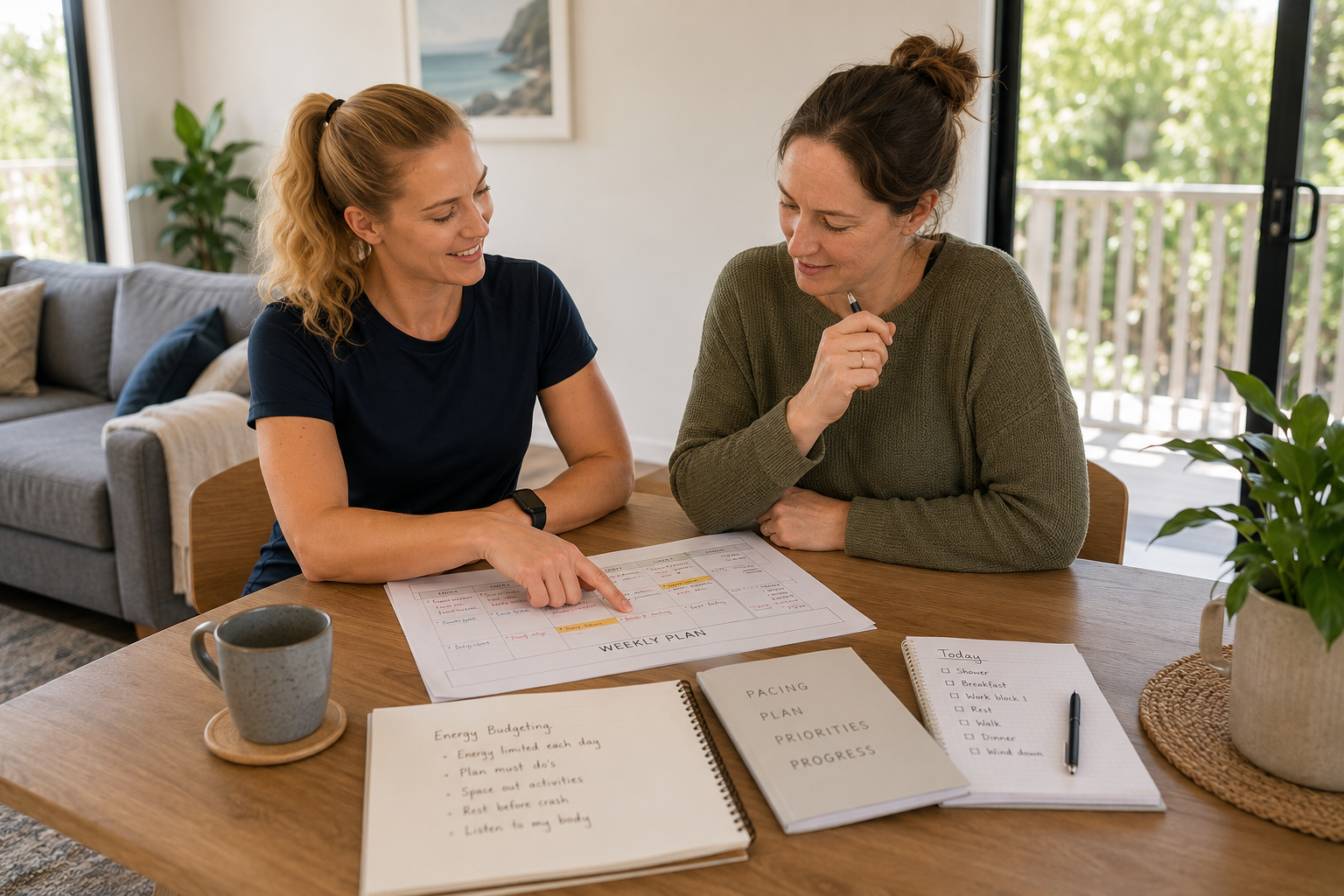
One of the key roles of an Occupational Therapist is helping people participate in the activities that are important to them. This may include work, study, parenting, household management, social activities and self-care. Occupational Therapy is not about becoming perfectly organised, tt is about understanding how your brain works and developing practical systems that support everyday life.
An Occupational Therapist may help you:
Develop routines that are easier to maintain
Break large tasks into manageable steps
Reduce cognitive overload
Improve organisation systems
Establish realistic planning strategies
Modify environments to support focus and productivity
Develop strategies for managing energy and overwhelm
The goal is not perfection. The goal is participation.
So what is the next step?
Living with ADHD can sometimes feel like constantly trying to catch up. Tasks can pile up. Responsibilities can feel overwhelming. Small jobs can seem much bigger than they really are. For many people, understanding executive functioning and recognising their unique strengths and challenges is an important first step. With the right support and strategies, everyday life can become more manageable.
At The Rehab Team, our Occupational Therapist support adults living with ADHD, Autism Spectrum Disorder and other neurological conditions throughout Tauranga, Papamoa, Mount Maunganui and the wider Bay of Plenty. We work alongside people in their own homes and communities to develop practical strategies that support participation in the activities that matter most.
Book an appointment with The Rehab Team today - Here.
Want to know more?
Have a look at The Rehab Team's other blogs here
References
-National Institute of Mental Health (NIMH) – Attention-Deficit/Hyperactivity Disorder
https://www.nimh.nih.gov
-Centers for Disease Control and Prevention (CDC) – ADHD in Adults
https://www.cdc.gov/adhd
-Children and Adults with Attention-Deficit/Hyperactivity Disorder (CHADD)
https://chadd.org
-American Psychological Association – Executive Function and ADHD resources
https://www.apa.org