Brain Fog and Cognitive Fatigue – Why everyday tasks can feel exhausting
Most people have experienced feeling mentally tired after a long day. Perhaps you have spent hours concentrating at work, studying for an exam, or trying to solve a difficult problem.
Now imagine that feeling occurring after a simple trip to the supermarket, a conversation with a friend, or replying to a few emails.
For many people living with Long COVID, Myalgic Encephalomyelitis/Chronic Fatigue Syndrome (ME/CFS), Multiple Sclerosis, Fibromyalgia and other neurological conditions, this is their reality.
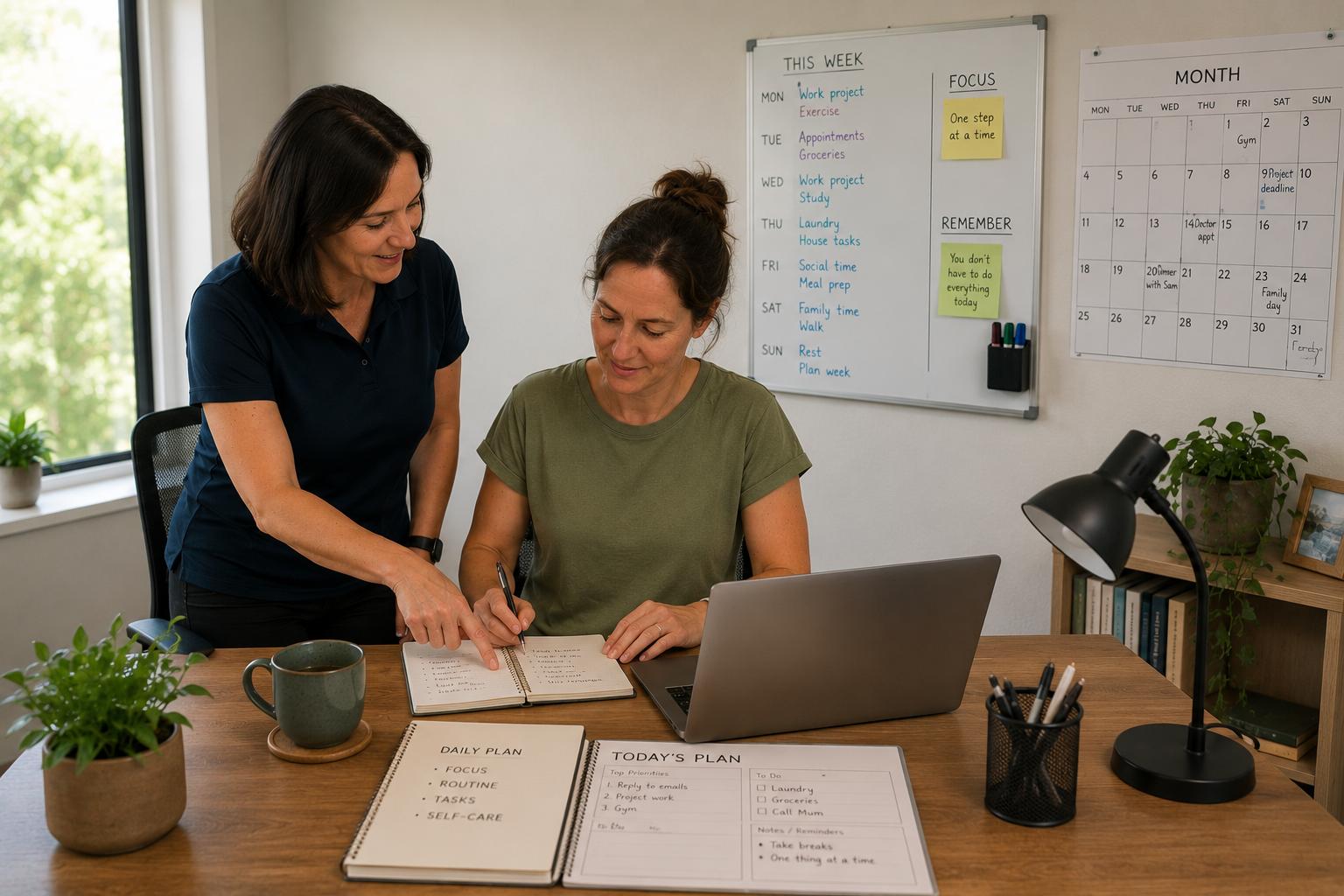
It is often described as "brain fog" or trying to think through sludge or treacle. Brain fog is one of those symptoms that can be difficult to explain to others. You know something is not quite right, but finding the words can be challenging. You may feel forgetful, struggle to concentrate, lose your train of thought, or simply feel mentally exhausted after tasks that used to feel easy.
While brain fog is not a medical diagnosis, it is a very real experience for many people.
What does brain fog feel like?
Brain fog can look different from person to person. Some people describe it as feeling like their brain is moving through mud. Others report difficulty concentrating, forgetting appointments, losing words mid-sentence, or struggling to follow conversations.
You might find yourself:
Reading the same paragraph several times
Walking into a room and forgetting why you are there
Struggling to find the right word during conversation
Feeling overwhelmed when there is too much information to process
Forgetting everyday tasks or appointments
These symptoms can be frustrating, particularly when they are not visible to other people.
It's not just in your head
One of the biggest challenges people face is that brain fog is often invisible.
Friends, family members and colleagues may see someone who looks physically well but have no idea how much effort it is taking to get through the day.
Research has shown that cognitive difficulties are commonly experienced by people living with Long COVID, Myalgic Encephalomyelitis/Chronic Fatigue Syndrome (ME/CFS), Multiple Sclerosis and other chronic health conditions. Problems with attention, concentration, memory and information processing can significantly impact daily life.
Why does mental fatigue happen?
Think of your brain like a mobile phone battery, most people wake up with a battery that comfortably lasts all day. For people experiencing cognitive fatigue, that battery may start the day only partially charged or drain much faster than expected.
Activities such as planning meals, managing finances, driving, working on a computer or participating in social situations all require cognitive energy. When that energy runs low, concentration, memory and thinking become much harder.
The boom and bust cycle
A pattern we commonly see is the "boom and bust" cycle. On a good day, it is tempting to catch up on everything that has been building up. You might clean the house, complete paperwork, do the shopping and meet a friend for coffee.
The following day, however, you may feel completely exhausted and unable to do much at all. Learning how to manage energy levels and pace activities can help reduce this cycle and improve consistency over time.
How can Occupational Therapy help?
One of the key roles of an Occupational Therapist is helping people participate in the activities that are important to them. This does not necessarily mean doing less. Instead, it means understanding where your energy is going and learning how to use it more effectively.
An Occupational Therapist may help you:
Identify activities that are draining your energy
Develop pacing and fatigue management strategies
Create routines that reduce cognitive load
Use memory aids, reminders and organisational tools
Modify tasks to make them more manageable
Plan a gradual return to work, study or other meaningful activities
The goal is to make everyday life more sustainable.
Small changes can make a big difference
Many people are surprised that relatively small changes can have a significant impact on their mental fatigue.
This may involve breaking tasks into smaller chunks, scheduling regular rest breaks, simplifying routines, or prioritising activities that are most important to you. What works for one person may not work for another, which is why an individualised assessment is important.
For many people, understanding their symptoms is an important first step towards managing them. With the right strategies and support, many people find they can better manage their energy, reduce overwhelm and improve their participation in everyday life.
At The Rehab Team, our Occupational Therapist supports people living with Long COVID, Myalgic Encephalomyelitis/Chronic Fatigue Syndrome (ME/CFS), Multiple Sclerosis, Fibromyalgia and other neurological conditions throughout Tauranga, Papamoa, Mount Maunganui and the wider Bay of Plenty. We work alongside people in their own homes and communities to develop practical strategies that support participation in the activities that matter most.
Want to know more?
Have a look at The Rehab Team's other blogs here
Reference
Long COVID Physio – Cognitive Dysfunction (Brain Fog)
https://longcovid.physio/brain-fogNICE Guideline: Myalgic Encephalomyelitis (or Encephalopathy)/Chronic Fatigue Syndrome: Diagnosis and Management (NG206)
https://www.nice.org.uk/guidance/ng206National Multiple Sclerosis Society – Cognitive Changes and Fatigue Resources
https://www.nationalmssociety.orgNational Institutes of Health (NIH) / PubMed Central reviews relating to cognitive fatigue and chronic fatigue syndromes
https://pmc.ncbi.nlm.nih.gov