Facial Nerve Palsy Rehabilitation
Facial Nerve Palsy Physiotherapy in Tauranga & Online
Has facial nerve palsy changed the way you smile, blink, eat or communicate?
Facial nerve palsy can happen suddenly and can affect much more than facial appearance. Changes in facial movement can make everyday activities more difficult and can also have a significant impact on confidence, communication and social interaction.
The Rehab Team provides neurological physiotherapy for people living with facial nerve palsy, including Bell’s palsy, Ramsay Hunt syndrome, facial nerve injury and longer-term facial weakness or synkinesis.
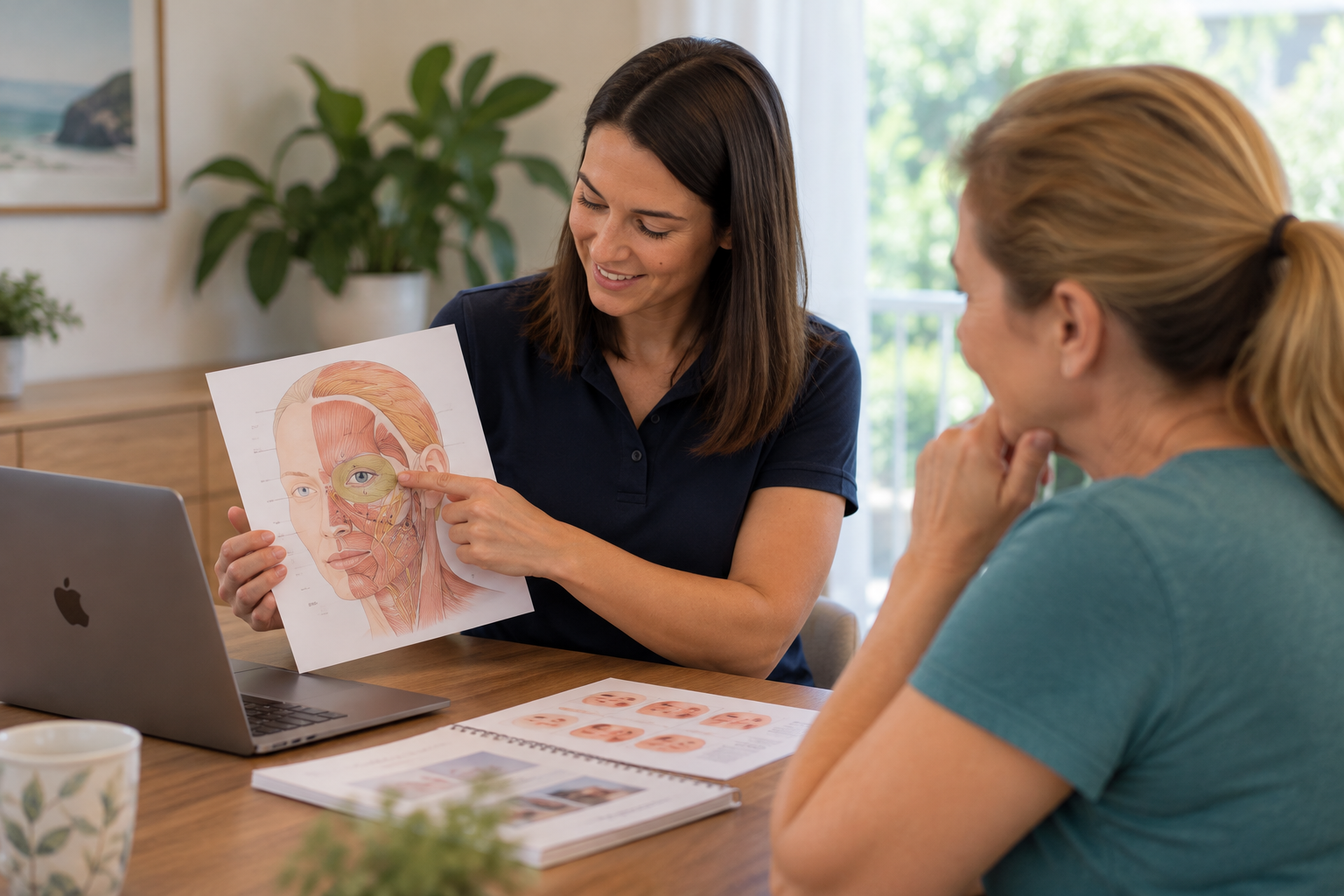
Neurological rehabilitation is what we do. Our clinicians work with people living with neurological conditions every day, giving us a strong understanding of how the brain, nerves and muscles work together to produce movement.
Facial nerve rehabilitation is well suited to online appointments. All our assessments, education, facial movement retraining, home programmes and follow up appointments can be completed effectively via video consultation. This means we can support people with facial nerve palsy throughout New Zealand, not just those living in Tauranga, Papamoa or Mount Maunganui.
What is facial nerve palsy?
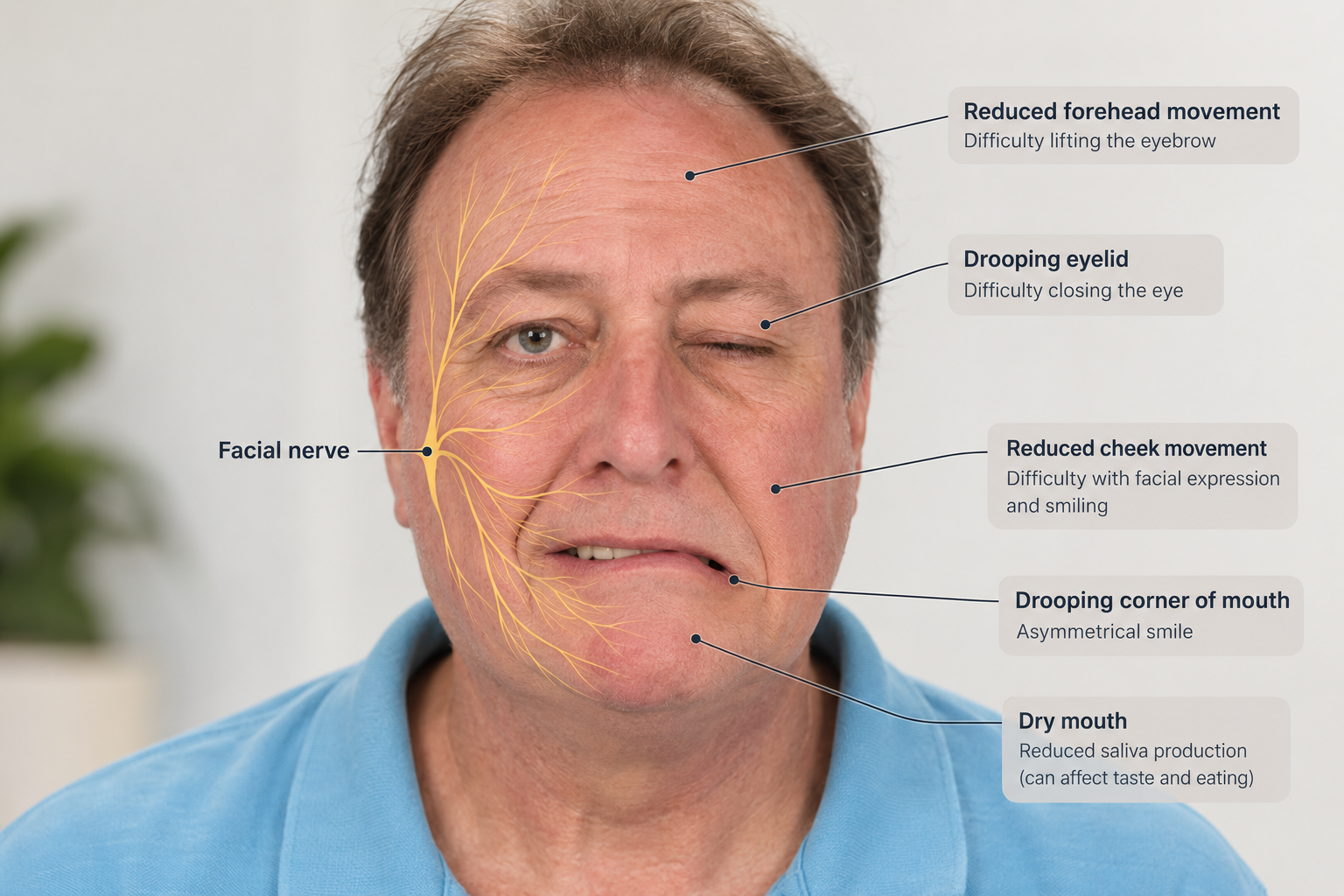
Facial nerve palsy occurs when the facial nerve (cranial nerve VII) is damaged or affected, resulting in weakness or paralysis of some or all of the muscles on one side of the face.
The facial nerve is responsible for much more than facial expression. It contributes to:
Smiling and other facial expressions
Closing and protecting the eye
Movement of the lips and cheeks
Eating and drinking
Some aspects of speech
Taste
Tear and saliva production
Regulation of sound sensitivity
There are many possible causes of facial nerve palsy, including Bell’s palsy, Ramsay Hunt syndrome, trauma, surgery, infection, tumours and other neurological conditions. Understanding the cause is important because it can influence recovery, treatment options, rehabilitation and outcomes.
How can physiotherapy help with facial nerve palsy?
Facial nerve recovery is different for everyone and depends on factors such as the cause, severity and stage of recovery.
Rehabilitation is not simply about strengthening weak facial muscles. It focuses on helping you develop controlled, coordinated and functional facial movement as the nerve recovers. Physiotherapy may include:
Assessment of facial movement: We assess facial symmetry at rest and during different movements, muscle activation, tone, coordination and any unwanted or compensatory movements.
Education and guidance: Understanding what is happening during recovery — and knowing what to do and what to avoid — is an important part of rehabilitation. Repeatedly forcing or exaggerating facial movements may not be appropriate. Your rehabilitation programme will therefore be matched to your individual presentation and stage of recovery.
Facial movement rehabilitation: Facial movement rehabilitation is focussed more on natural movement patterns and appropriate recruitment of muscles.
Neuromuscular retraining: Neuromuscular retraining focuses on improving the brain's control of facial movement. This may involve learning to activate specific muscles, improve timing and coordination, and reduce unwanted muscle activity.
Managing tightness and discomfort: Where appropriate, rehabilitation may include gentle techniques such as massage, stretching, relaxation or other strategies to help manage facial tightness and improve comfort.
Home rehabilitation: Much of facial rehabilitation takes place between appointments. We provide an individualised home programme and guide you on how to practise safely and consistently.
What is synkinesis?
Some people develop synkinesis during facial nerve recovery. This occurs when an intended facial movement is accompanied by an unwanted movement — for example, the eye narrowing or closing when smiling.
Synkinesis can develop as the facial nerve regenerates and nerve signals are incorrectly directed to muscles that were not originally intended to activate together.
If synkinesis develops, rehabilitation focuses on improving awareness, movement control and reducing unwanted linked movements. This is often alongside other medical professionals.
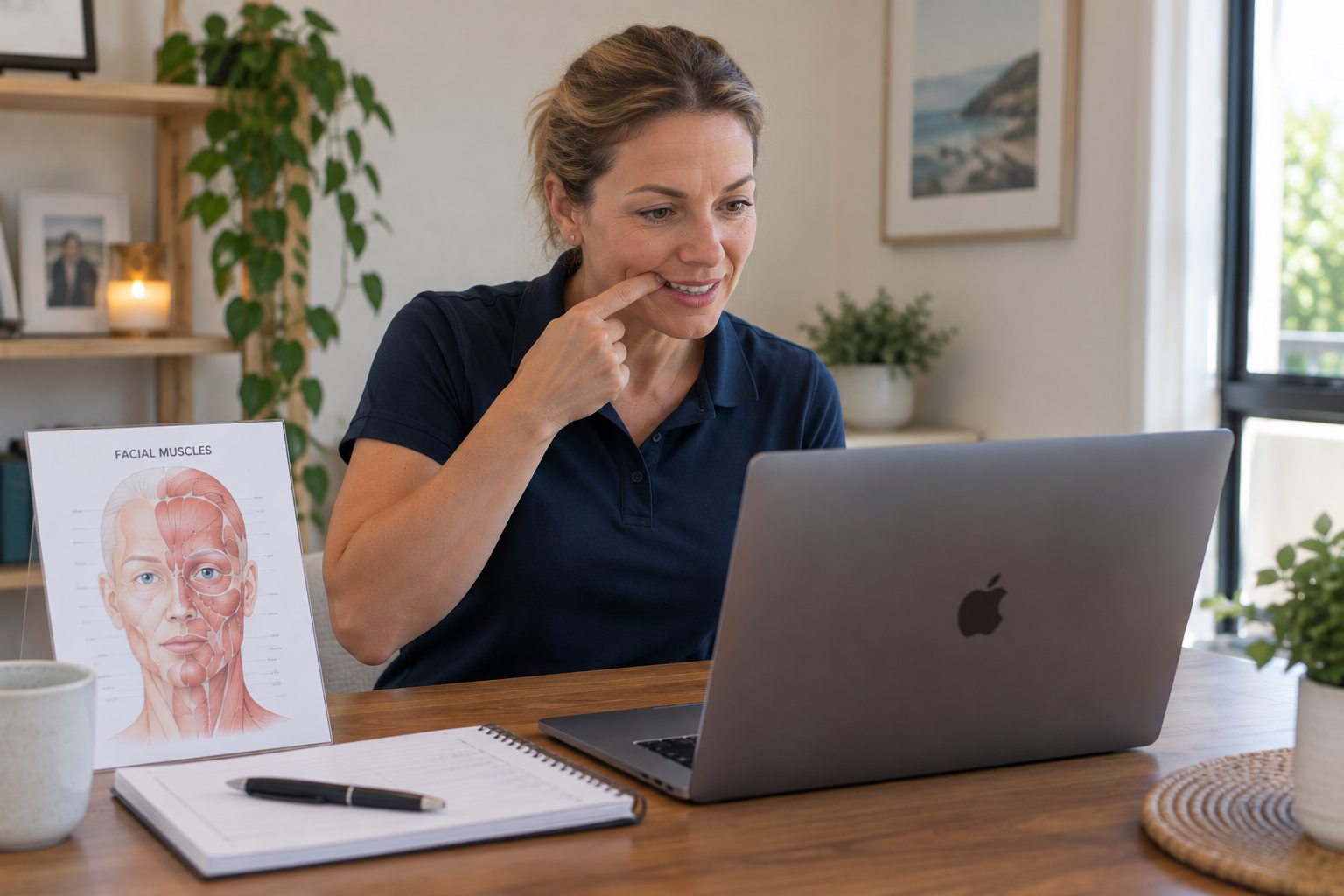
Facial nerve rehabilitation is about more than movement
Facial nerve palsy can affect eating, drinking, speaking, eye protection, facial expression and communication. It can also affect confidence and how comfortable you feel in social situations.
Our rehabilitation considers the functional and personal impact of facial nerve palsy, not just how much movement has returned. The goal is to help you make the most of your recovery and develop the best possible control and function for your individual presentation.
When should I see a physiotherapist?
Facial nerve rehabilitation can be appropriate at different stages of recovery.
You may benefit from assessment if:
You have recently developed facial weakness and are unsure what you should be doing
Your facial movement is beginning to return
Your recovery has slowed or plateaued
Your face feels tight or stiff
You have developed synkinesis
You are having difficulty with eating, drinking or speaking
You are concerned about facial symmetry or movement control
You want guidance on a personalised home rehabilitation programme
Early assessment can also provide education about the recovery process and help ensure that your rehabilitation is appropriate for the stage of recovery you are in.
How The Rehab Team can help
At The Rehab Team, neurological rehabilitation is what we do every day. Our Neurological Physiotherapists have experience working with complex neurological presentations and understand the importance of assessing the interaction between the brain, nerves and muscles during facial movement.
Whether you are in the early stages of facial nerve palsy, beginning to regain movement or experiencing longer-term weakness or synkinesis, we can help you understand your presentation and develop an individualised rehabilitation programme.
Online appointments for facial nerve palsy rehabilitation is available throughout New Zealand, making it possible to access our support even if you do not live locally. For many people, facial nerve rehabilitation can be delivered very effectively through online appointments, with face-to-face appointments available in Tauranga, Papamoa and Mount Maunganui.
Contact The Rehab Team today to arrange an assessment.